


In Rocklin, pool heaters work hard from early spring through late fall. Whether you have a gas heater, electric unit, or heat pump, breakdowns happen when you least expect them. Cool Pools provides swimming pool heater repair in Rocklin for all major heater types, with same-week diagnosis and repair for most common failures. With over 23 years of hands-on experience, our team keeps your backyard ready for every season.
Pool heater diagnosis starts with checking for error codes, ignition failure, and weak heat output. In Rocklin, calcium scale from hard water and debris from nearby oaks are top causes of heater failure. A trained technician tests each component in a set order to find the problem fast.
A pool heater rarely fails all at once. Most problems start small and get worse over time. Catching the early warning signs saves you money and keeps your pool comfortable when you need it most.
The pool stays cold even though the heater is running. This is one of the most common calls we get from Rocklin homeowners. The unit cycles on, runs for a few minutes, then shuts off before the water reaches temperature. Short-cycling like this usually points to a faulty thermostat, a dirty flame sensor, or restricted water flow.
Error codes show up on the display panel. Modern heaters have built-in diagnostics. When a code appears, it is telling you something specific failed. Ignoring it often leads to a second failure that costs more to fix.
You hear clicking, popping, or banging sounds at startup. These noises usually mean delayed ignition. Gas builds up before the igniter fires, and the result is a small burst inside the combustion chamber. Left alone, this damages internal components fast.
The heater runs but the water is barely warm. Weak heat output often comes from calcium scale coating the heat exchanger. In Rocklin, this is common because of the mineral content in local water.
Homes in Whitney Oaks and Stanford Ranch tend to run heaters from March through November. That extended season means more wear on every component, especially during summer months when temperatures push past 100°F. The earlier you spot a problem, the easier and cheaper it is to fix.
Two things shorten the life of a pool heater faster than anything else: mineral-heavy water and extreme heat. Rocklin has both.
Placer County water sources carry high levels of calcium and magnesium. As your heater warms the water, those minerals separate out and stick to the inside of the heat exchanger. Over time, that layer of scale acts like insulation. The heater works harder to push the same amount of heat through, and efficiency drops. According to the U.S. Department of Energy, mineral buildup is one of the leading causes of reduced efficiency and premature failure in water heating systems.
Here is what happens when scale builds up unchecked:
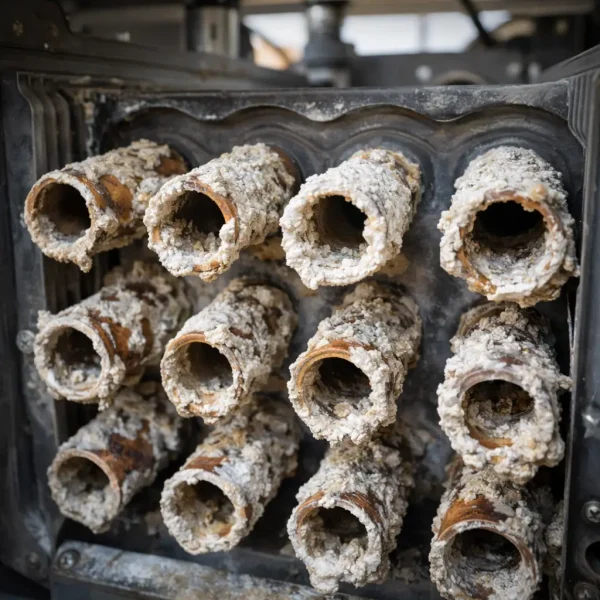
Rocklin’s long summers make this worse. When outdoor temperatures stay above 95°F for weeks at a time, the heater and its surrounding equipment sit in intense ambient heat even when the unit is off. Rubber seals dry out. Wiring insulation becomes brittle. Plastic housings warp around gas connections.
Pool owners who understand these two root causes are better prepared to prevent repeat breakdowns. Most heater failures we see in Rocklin are not random. They follow a pattern tied directly to hard water and heat exposure. A single annual service visit that includes flushing the heat exchanger and inspecting heat-stressed components stops most of these problems before they start.
A pool heater that stops working does not always need to be replaced. In many cases, a single part swap restores full function and adds years of reliable service to the unit.
New pool heaters cost anywhere from $1,500 to $4,000 or more depending on the type and size. Installation adds to that number. When the problem turns out to be a $150 flame sensor or a $300 control board, replacing the whole unit wastes money you did not need to spend.
How do you know if repair is the right call? Three factors guide the decision:
Many homes in Sunset West and Clover Valley were built within the last 10 to 15 years. The heaters in these neighborhoods are often well within their working lifespan. For these homeowners, a targeted repair is the smart move.
We diagnose the problem first, explain what failed and why, then walk you through your options. No pressure to replace a unit that still has good years ahead of it.
If you have never scheduled a pool heater repair before, knowing what happens during the visit takes the guesswork out of the process. Our goal is to diagnose the problem, explain it clearly, and get your heater running again as quickly as possible.
Step 1: Visual inspection and error code check. The technician starts by looking at the unit for obvious signs of damage, corrosion, or wear. If the heater displays an error code, that narrows the diagnosis right away.
Step 2: Component-by-component testing. We test each part in a set order. The igniter, flame sensor, and gas valve get checked for blockages or corrosion. The heat exchanger is inspected for calcium buildup. The thermostat and water flow sensors are tested for accurate readings. This step-by-step approach finds the root cause instead of guessing.
Step 3: Diagnosis and options. Once we identify the failure, we explain what went wrong and why. If a repair makes sense, we walk you through the fix. If replacement is the better path, we explain that too. You make the call.
Step 4: Repair and testing. Most standard repairs are completed in a single visit. Our technicians serving Rocklin carry common parts for gas heaters and heat pump models popular in newer local developments. After the repair, we run the heater through a full cycle to confirm proper operation before we leave.
The entire visit typically takes one to two hours depending on the issue. We show up on time, keep the work area clean, and make sure you know exactly what was done before we go.
A pool heater that gets annual service lasts significantly longer than one that only gets attention when something breaks. Most heaters are built to run 10 years or more, but only if the key components stay clean and calibrated.
Think of it the same way you think about your car. You change the oil before the engine fails, not after. Pool heaters work the same way. Small problems caught early stay small. Left alone, they turn into expensive repairs or full replacements.
Here is what a yearly heater tune-up covers:
The best time to schedule this service in Rocklin is early spring. After months of sitting idle through winter, heaters collect dust, debris from nearby oak trees, and built-up scale from the last swim season. A spring tune-up clears all of that out before you need the heater running daily.
Rocklin’s long hot season stretches from April into October for most pool owners. That is six to seven months of regular use. A heater that starts the season clean and properly adjusted handles that workload without trouble. One that starts the season with leftover scale and worn parts is far more likely to fail in the middle of summer when you need it most.
Getting your pool heater repaired is only half the job. How you run it afterward determines how long the fix lasts and how much energy you use.
Use a timer to control heater cycles. Running a pool heater nonstop wastes energy and puts unnecessary stress on the components that were just repaired. A timer lets you heat the pool during the most efficient hours and shut it down when it is not needed.
Match your run times to the season. Rocklin’s weather shifts dramatically between winter and summer, and your heater schedule should follow. During triple-digit summer days, the pool holds heat well on its own. Overnight heat loss is minimal from June through September, so shorter heater cycles get the job done. In spring and fall when nighttime temperatures drop into the 40s and 50s, longer run times help the pool reach a comfortable temperature by morning.
A simple seasonal guide:
Keep the area around your heater clear. Good airflow matters for both gas heaters and heat pumps. Trim back plants, remove leaves, and make sure nothing blocks the intake or exhaust vents. Restricted airflow forces the unit to work harder and shortens the life of the repair.
Watch for early warning signs. After a repair, pay attention during the first few weeks. If the heater short-cycles, makes unusual sounds, or fails to reach temperature, call us back. Catching a follow-up issue early is always easier than waiting until something fails again.
A pool heater that keeps shutting off in Rocklin is usually responding to a blocked burner, a dirty filter, or low water flow caused by calcium scale in the local water. Hard water from Placer County sources leaves mineral deposits inside the heater and along plumbing lines over time. This restricts flow and triggers the safety switch to shut the unit down. A clogged or worn pool filter can cause the same issue by starving the heater of the water volume it needs to operate. A technician can test each of these components and pinpoint the exact cause in a single visit.
Most pool heater repairs in Rocklin are completed in a single visit, typically within one to two hours. Our technicians carry common replacement parts for gas heaters and heat pump models used in local homes. If your unit requires a part that needs to be ordered, that may add a few business days. We schedule same-week appointments for most heater calls so you are not waiting long to get your pool back to a comfortable temperature.
The best time to schedule pool heater repair in Rocklin is early spring before swim season demand picks up. March and early April offer faster scheduling, better parts availability, and enough lead time to handle any surprise issues before you need the heater running daily. If your heater failed during the off-season, getting it repaired before the first warm stretch means your pool is ready the moment you want to use it.
Pump repairs & installation
Pool Filter Repair
Swimming Pool Inspection
Pool Pump Replacement
Commercial Pool Maintenance
Pool Motor Repair
Swimming Pool Electrical Repair
Pool Automation System Repair
Pool Light Repair
Pool Plumbing Repair
Swimming Pool Auto Water Fill Repair
Heat Pump Repair
Pool System Diagnostics
Swimming Pool Equipment Repair
Saltwater System Repair
Serving: Rocklin · Roseville · Lincoln · Granite Bay · Loomis · Penryn · Newcastle · Auburn · Citrus Heights · Folsom · Orangevale · Fair Oaks · Carmichael
Call us or fill out the form above to schedule your Rocklin pool heater repair today.