


In Rocklin, pool electrical problems can shut down your entire backyard in minutes. A tripped breaker, a dead pump, or a heater that will not fire all point to wiring and electrical issues that need professional attention. Cool Pools provides swimming pool electrical repair for pumps, heaters, control panels, and wiring across Rocklin. Most repairs are completed the same week by licensed technicians. With over 23 years of experience, we keep your pool safe and running so you can get back to enjoying it.
Swimming pool electrical repair covers the diagnosis and correction of wiring, breakers, panels, and connections for all pool equipment. In Rocklin, heat exposure, soil movement, and aging infrastructure make electrical issues one of the most common reasons pools stop working properly.
Common repairs include:
A licensed pool repair technician restores safe operation and prevents further equipment damage.
A pool pump that keeps shutting off is not just annoying. It is telling you something specific is wrong. The breaker is doing its job by cutting power before damage spreads. The key is finding out why it keeps tripping.
The most common causes include a worn pump motor drawing too many amps, a corroded wire connection creating resistance, or a breaker that has weakened over years of use. Each one produces the same symptom but requires a different fix. That is why guessing rarely works and often leads to replacing parts that were never the problem.
Rocklin’s summer heat makes this worse. When temperatures climb above 105°F, pump motors work harder and run hotter. That extra strain pushes aging circuits closer to their limit. A motor that barely triggered the breaker in April may trip it every afternoon in July.
Our technicians test the breaker, inspect the wiring, and measure the motor’s amp draw to pinpoint the exact cause. We repair what needs fixing and leave what does not. You get a pump that runs the way it should, even on the hottest days of the year.
Your pool pump, heater, and lights each pull a significant amount of power. When two or more pieces of equipment share a single circuit, voltage drops and overloads become a real risk. Dedicated circuits give each piece of equipment its own protected path back to the electrical panel.
Without dedicated circuits, you may notice pumps running slower than normal, heaters taking longer to warm the water, or breakers tripping when multiple systems kick on at the same time. These are not equipment failures. They are electrical supply problems. The equipment is starved for power.
Dedicated circuits also reduce fire risk. A shared circuit forced to carry more load than it was designed for generates heat inside the wire. Over time, that heat breaks down insulation and creates a hazard hidden behind walls or underground.
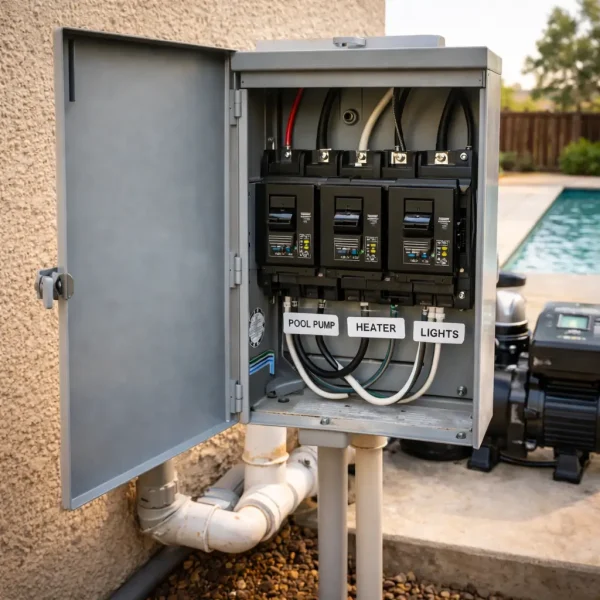
In neighborhoods like Whitney Ranch and Stanford Ranch, many homes were built with subpanels that made sense for the original pool equipment. But today’s variable-speed pumps, heat pumps, and automation systems demand more from the electrical supply than those older panels were sized to handle. A subpanel upgrade paired with properly rated dedicated circuits brings the system in line with what modern equipment requires.
According to the National Fire Protection Association, electrical failures are a leading cause of home fires, which is why code requires dedicated circuits for major pool equipment. We evaluate your current panel and wiring, identify any shared or undersized circuits, and install dedicated lines where needed. The result is equipment that performs the way the manufacturer intended and an electrical system you can trust.
When a pool heater stops working, the problem is not always inside the heater itself. In many cases, the issue sits in the electrical supply feeding it. A faulty breaker, a loose connection at the disconnect, or damaged wiring between the panel and the equipment pad can all prevent a heater from firing. Calling a general electrician or an HVAC tech often means multiple visits and multiple bills because each one only looks at their piece of the puzzle.
Our licensed technicians diagnose both sides in a single visit. We check the heater’s ignition circuit, control board, and safety switches. Then we trace the electrical supply back through the disconnect, the wiring run, and the breaker. If the problem is a burned wire at the terminal block, we fix it. If the breaker is undersized or failing, we replace it. One visit. One crew. One solution.
Rocklin’s clay-heavy soil adds a challenge that many homeowners do not expect. Clay expands when wet and contracts when dry. That seasonal movement puts stress on underground conduit runs between the main panel and the pool equipment pad. Over time, conduit joints separate and wiring gets pinched or exposed to moisture. We inspect conduit integrity as part of every heater electrical repair so hidden damage does not come back as a bigger problem later.
If your heater will not ignite, heats slowly, or throws error codes, the answer may not be a new heater. It may be an electrical repair that costs a fraction of a replacement. We find the real cause before recommending any work.
Most newer pool pumps are designed to run on 220V power. But many older pools in Rocklin were originally wired for 110V. Running a modern pump on 110V wiring forces the motor to pull twice the amperage to do the same work. That extra amp draw creates more heat in the motor and the wiring, shortens the life of both, and costs more to operate.
Switching from 110V to 220V cuts the amp draw in half. Here is what that means in practical terms:
Many older pools near Sunset Whitney and along Rocklin Road still run on their original 110V wiring from when the pool was first built. That wiring was fine for the single-speed pumps of 15 or 20 years ago. But pairing it with a modern variable-speed pump limits what the new equipment can do.
The upgrade involves running a new 220V line from the subpanel to the equipment pad, installing the correct breaker, and reconfiguring the pump’s wiring terminals. We handle the full process and verify everything meets current code before the system goes live. The pump runs cooler, quieter, and more efficiently from day one.
Your pool’s electrical panel is the control center for every piece of equipment on the pad. If the panel is outdated, undersized, or missing required safety features, it puts your equipment and your family at risk. A code-compliant panel supports the demands of modern pool systems and passes inspection without surprises.
Placer County requires GFCI protection and proper bonding for all pool electrical work. GFCI breakers cut power instantly when they detect a ground fault, which is the type of electrical failure most likely to cause shock near water. Bonding connects all metal components around the pool to a common ground so stray voltage has a safe path to follow. Both are non-negotiable under California electrical code.
Panels installed before 2010 often fall short of current requirements. Common issues we find include:
An aging panel does not always look like a problem from the outside. The warning signs tend to show up as equipment issues instead. Pumps tripping for no clear reason, heaters cycling on and off, or lights flickering can all trace back to a panel that cannot keep up.
We assess your current panel against what your equipment actually needs and what Placer County code requires. If an upgrade is necessary, we size the new panel to handle your existing equipment plus any future additions. That way you are not paying for another panel upgrade the next time you add a heater or automation system.
The best time to find an electrical problem is before it shuts down your pool on a 100-degree Saturday. A seasonal inspection in spring gives you a clear picture of your system’s condition before daily use begins.
During an inspection, our technicians check every connection point from the panel to the equipment pad. We look for loose wire terminals, cracked insulation, corrosion on breakers, and signs of moisture inside disconnects or junction boxes. These small issues are easy to fix when caught early. Left alone, they turn into tripped breakers, burned wiring, or failed equipment mid-season.
Rocklin’s foothill location brings a problem many pool owners do not think about until it is too late. Ground squirrels are common in the area and they chew through exposed wiring near equipment pads. A single chewed wire can knock out a pump, create a short circuit, or leave bare copper exposed near water. Our inspections include a visual check of all accessible wiring runs for rodent damage, and we recommend protective conduit or wire loom where needed.
We also recommend scheduling an inspection after any major storm. High winds, heavy rain, and falling branches can damage outdoor electrical components that sit exposed year-round. A quick post-storm check catches problems before you flip the pump back on and discover them the hard way.
One inspection each spring keeps your electrical system reliable through the heavy-use months. It is a small step that prevents big headaches when you need your pool the most.
If your pool pump breaker needs repair or replacement, the clearest sign is repeated tripping after you reset it. A single trip can happen from a temporary surge. But when the breaker will not hold, a technician needs to test the breaker itself, the wiring, and the pump motor to find which component is failing. In Rocklin, summer heat accelerates wear on all three, so breakers that held fine in cooler months may start failing once temperatures climb.
Yes, your Rocklin pool pump needs its own dedicated breaker. California electrical code requires a dedicated circuit for each major piece of pool equipment. Sharing a circuit between a pump and other devices creates overload risk and can cause both the pump and the breaker to fail prematurely.
A licensed pool repair technician can fix your pool heater’s electrical connection. Our team handles heater wiring, ignition circuits, and breaker connections in a single service call. This eliminates the need to schedule separate visits from a general electrician and a pool technician.
Upgrading your pool pump wiring from 110V to 220V reduces energy use and cuts heat stress on the motor. The difference is especially noticeable during long Rocklin summer run cycles when pumps operate for eight hours or more each day. Most modern variable-speed pumps are built to run on 220V and perform best with that supply.
Commercial Pool Maintenance
Pool Filter Repair
Swimming Pool Inspection
Pool Pump Replacement
Swimming Pool Heater Repair
Pump Repairs & Installation
Pool Motor Repair
Pool Automation System Repair
Pool Light Repair
Pool Plumbing Repair
Swimming Pool Auto Water Fill Repair
Heat Pump Repair
Pool System Diagnostics
Swimming Pool Equipment Repair
Saltwater System Repair
Serving: Rocklin · Roseville · Lincoln · Granite Bay · Loomis · Penryn · Newcastle · Auburn · Citrus Heights · Folsom · Orangevale · Fair Oaks · Carmichael
Schedule your Rocklin pool electrical repair before a small issue becomes a costly failure.