


Rocklin’s summer heat pushes temperatures past 100°F for weeks at a time. That kind of heat pulls water out of your pool fast. When your auto fill system cannot keep up, water levels drop and your equipment pays the price.
This page covers auto water fill repair, float valve replacement, and fill valve adjustment for residential and commercial pools in Rocklin. Whether your valve is stuck, leaking, or running nonstop, Cool Pools offers same-week swimming pool auto water fill repair in Rocklin, CA so your system works the way it should.
With over 23 years of hands-on pool repair experience, we diagnose the problem, explain your options, and get the fix done right.
A pool auto fill valve uses a float mechanism connected to your home’s water supply line. When the pool water level drops below a set point, the float lowers and opens the valve to let fresh water flow in. Once the water rises back to the correct level, the float lifts and shuts the valve off automatically.
Most pool owners in Rocklin do not check their auto fill valve until something goes wrong. The problem is that a failing valve does not always announce itself. It wears down quietly, and the signs are easy to miss when summer heat is already pulling water from your pool.
Here are the most common warning signs:
In neighborhoods like Whitney Ranch and Stanford Ranch, homeowners often assume their pool is just losing water to evaporation. Rocklin summers make that a fair guess. But when your pool drops more than a quarter inch per day, the auto fill system deserves a closer look.
A float valve that sticks open wastes hundreds of gallons. A valve that sticks shut lets your water level fall below the skimmer line. Either way, your pump runs without proper flow, and that shortens its lifespan.
Early detection saves water, protects your equipment, and avoids a bigger repair bill down the road. If your water level has been unpredictable, do not wait for a pump problem to confirm the cause. A quick inspection tells you exactly where you stand.
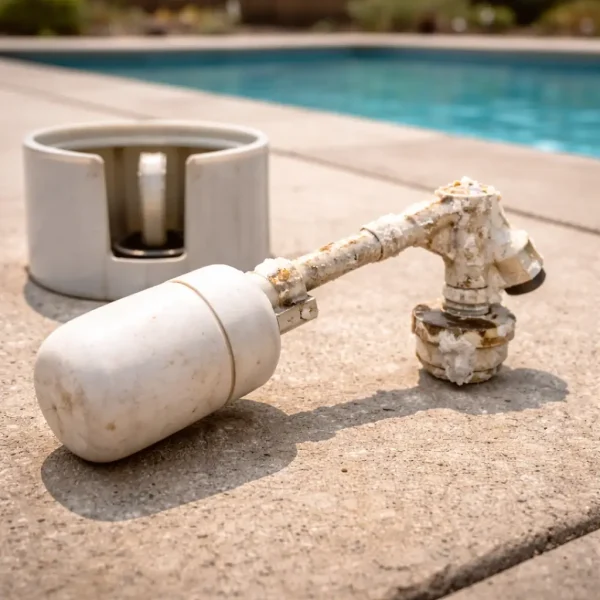
Your pool auto fill system is simple by design. A float sits inside a canister near the pool deck or inside the skimmer. That float connects to a valve on your water supply line. When the pool water drops below a set level, the float lowers and opens the valve. Water flows in until the float rises back up and shuts it off.
It works the same way as the fill valve in a toilet tank. When every part moves freely, the system keeps your pool at the right level without any help from you.
So why does it stop working?
The most common cause is mineral buildup. Rocklin’s water supply carries high levels of calcium and other dissolved minerals. Over time, those minerals coat the float arm, the valve seat, and the inside of the canister. The float gets stuck in one position. The valve either stays open or stays closed, and your water level swings in the wrong direction.
Beyond mineral deposits, general wear takes a toll. Rubber seals inside the valve dry out and crack after years of use. The float itself can take on water and lose buoyancy. Plastic components become brittle under constant sun exposure on the pool deck.
When a homeowner in Rocklin calls and says their auto fill “just stopped working,” the float valve is almost always where we start. Knowing how the mechanism works helps you describe the problem clearly when you book a service call. Details like “the float is not moving” or “water runs nonstop” point us to the right fix faster and save time on the visit.
Online videos make auto fill valve replacement look like a quick weekend project. Remove the old valve, drop in the new one, and turn the water back on. In practice, it is not that simple.
The fill valve connects directly to your home’s water supply line. An incorrect connection can cause a backflow risk, sending pool water back into your drinking water system. Rocklin homeowners are required to maintain proper backflow prevention on any cross-connection with the municipal water supply. The Placer County Environmental Health Division oversees cross-connection control for the region, and a failed backflow test creates headaches no pool owner wants to deal with.
Valve sizing matters more than most people realize. Auto fill valves come in different flow rates and connection sizes. Installing a valve rated too high for your pool sends water in too fast and overshoots the target level. A valve rated too low cannot keep up with Rocklin’s peak summer evaporation. Matching the right valve to your pool size and plumbing layout takes experience.
Access points add another layer of difficulty. In Sunset Whitney and Clover Valley, many pools were built 15 to 20 years ago. Valve canisters on these older builds sit in tight spaces, sometimes buried under decking material or wedged against raised bond beams. Without knowing the original plumbing layout, a DIY attempt can damage surrounding plumbing or the canister housing itself.
A professional replacement includes correct valve sizing, a secure water line connection, backflow prevention, and a function test before the technician leaves. The job typically takes under an hour, and you walk away knowing the system is set up right.
If you have never had your auto fill system repaired, you probably have questions about what the visit looks like. Here is what to expect when a Cool Pools technician arrives at your Rocklin home.
Most auto fill valve repairs in Rocklin take 30 to 60 minutes. Your pool stays in service the entire time, and there is no need to drain or shut down equipment during the visit.
Spring is the best time to verify your auto fill valve is working correctly. Rocklin temperatures climb fast once April hits, and by June your pool loses water every single day. A valve that passed inspection in the fall may not perform the same after months of sitting idle.
Start with a visual check. Open the canister lid and look at the float. It should move up and down freely with no resistance. If you had the valve repaired or replaced over the winter, confirm that no debris has settled around the float arm since the last service visit.
Rocklin’s spring pollen season adds a layer of risk most pool owners overlook. Oak trees drop heavy amounts of pollen and small debris from March through May. That material collects inside float canisters quickly, especially on properties with mature trees nearby. A freshly repaired valve can lose function within weeks if the canister fills with organic debris.
After your visual check, run a simple fill test. Lower your pool water about an inch below the normal level using a submersible pump or by letting it evaporate naturally over a warm day. Watch the auto fill kick on. The valve should open within a few minutes and bring the water back to the set level without overshooting or running too long.
If the valve hesitates, runs nonstop, or does not activate at all, call for service before summer demand hits. Scheduling a checkup in March or April is far easier than waiting for a July emergency when every pool company in Rocklin is booked solid.
A five-minute spring test gives you confidence that your system is ready for the hottest months of the year.
A working auto fill valve is easy to forget about. It runs quietly in the background, keeping your water level steady without any input from you. But like every other piece of pool equipment, it needs periodic attention to stay reliable.
Rocklin’s calcium-heavy water supply is the biggest factor working against your valve. Mineral scale builds up on the float arm, the valve seat, and the interior walls of the canister every single month. Left alone for a full year, that buildup is often enough to lock the float in place. Once the float stops moving, the valve either overfills your pool or lets the water level drop below the skimmer line.
A simple annual maintenance schedule keeps the system running smoothly:
Descale the float assembly and valve seat at least once per year. A technician removes the float, soaks or scrubs the mineral deposits off, and inspects the rubber seals for cracking. This visit takes about 20 minutes and catches small problems before they turn into full replacements.
Clean the canister housing at the same time. Dirt, pollen, and small insects collect at the bottom of the canister throughout the year. Homes in Whitney Oaks with mature tree canopy tend to accumulate debris faster and may need canister cleaning twice per year.
Test the fill cycle after every cleaning. A quick function test confirms the valve opens at the right water level, fills at the correct rate, and shuts off cleanly.
Pair your auto fill maintenance with your regular pool equipment checkup each spring. When your technician is already on-site inspecting the pump, filter, and heater, adding the fill valve to the list takes minimal extra time and keeps every part of your system on the same service schedule.
Spending a few minutes on prevention each year is far less expensive than replacing a damaged valve or repairing a pump that ran dry because the water level dropped too low.
To shut off your pool auto fill valve in an emergency, locate the dedicated shutoff valve near your pool equipment pad. Turn it clockwise until it stops. This cuts the water supply to the fill valve immediately. Once the water stops flowing, call for a repair to find out what caused the malfunction.
A pool auto fill valve typically lasts 5 to 10 years before it needs replacement. That range depends on water quality, sun exposure, and how often the valve cycles. In Rocklin, calcium-heavy water shortens valve life because mineral buildup wears on seals and float components faster. Annual descaling and cleaning help push your valve toward the longer end of that range.
A properly working pool auto fill system uses very little water on a daily basis. It only opens when the water level drops below the set point and shuts off once the level is restored. In Rocklin’s peak summer heat, the valve may run briefly each day to replace what evaporation takes. A valve that runs constantly or never shuts off is malfunctioning and can waste hundreds of gallons per week
Commercial Pool Maintenance
Pool Filter Repair
Swimming Pool Inspection
Pool Pump Replacement
Swimming Pool Heater Repair
Pump Repairs & Installation
Pool Motor Repair
Swimming Pool Electrical Repair
Pool Automation System Repair
Pool Light Repair
Saltwater System Repair
Heat Pump Repair
Pool Plumbing Repair
Pool System Diagnostics
Swimming Pool Equipment Repair
Serving: Rocklin · Roseville · Lincoln · Granite Bay · Loomis · Penryn · Newcastle · Auburn · Citrus Heights · Folsom · Orangevale · Fair Oaks · Carmichael
Schedule your Rocklin auto fill valve repair before low water levels damage your equipment.