


In Rocklin, pool pumps take a beating. Long summer run cycles push motors hard for months. Freezing winter nights crack seals and damage bearings. When your pump starts acting up, you need fast, honest service from a team that knows this climate. This page covers pool pump repair, motor replacement, and full pump installation for residential pools across Rocklin. Same-week service is available for most homes. Cool Pools is a licensed swimming pool repair service built around keeping your equipment efficient and reliable, backed by over 23 years of hands-on experience.
Yes, most pool pumps can be repaired when the problem is caught early. A licensed technician inspects the motor, seals, impeller, and capacitor to find the exact failure point. In Rocklin, common pump repairs include:
Not every pump needs to be replaced. A professional diagnostic determines whether a targeted repair can restore full performance or if the pump has reached the end of its useful life.
Most pool pumps give warning signs before they quit. The problem is that many homeowners in Rocklin don’t recognize those signs until the pump stops working altogether. Catching small issues early can save you from a full replacement and keep your pool running through the hottest months of the year.
A grinding or screeching noise usually means the bearings are worn. If your pump hums but the motor doesn’t spin, the capacitor or motor windings may be failing. Weak water flow at the return jets often points to a clogged impeller or a suction-side air leak. Water pooling around the base of the pump is a sign that the shaft seal has started to break down.
Rocklin’s hard water speeds up seal and bearing wear faster than many pool owners expect. Mineral deposits build up inside the pump housing over time, putting extra stress on moving parts. Homes in Whitney Oaks and Stanford Ranch with mature landscaping also deal with heavy oak debris that clogs strainer baskets and forces the pump to work harder.
If you notice any of these warning signs, schedule a diagnostic before the damage spreads. A simple repair today often prevents an emergency replacement next month.
When your pool pump motor dies, the first question is always the same. Should you replace just the motor or swap the entire pump? The answer depends on three things: the age of your pump, the type of pump you have, and how much you’re spending on electricity.
Age of the pump. If your pump is less than six years old and the housing, impeller, and plumbing connections are all in good shape, a motor replacement usually makes sense. The body still has years of life left, and a new motor restores full performance at a lower cost than a complete swap.
Type of pump. Single-speed pumps were standard for decades, but they run at full power every time they turn on. In Rocklin’s 100-plus-degree summers, that means high energy bills from June through September. If your current pump is a single-speed model, replacing just the motor keeps you locked into that same high operating cost. A full pump swap to a variable-speed model often pays for itself within two to three years through lower electricity use.
Repair history. If you’ve already replaced the motor once or had multiple seal and capacitor repairs, the pump body may be nearing the end of its useful life. Putting another motor into aging equipment usually leads to another failure within a year or two.
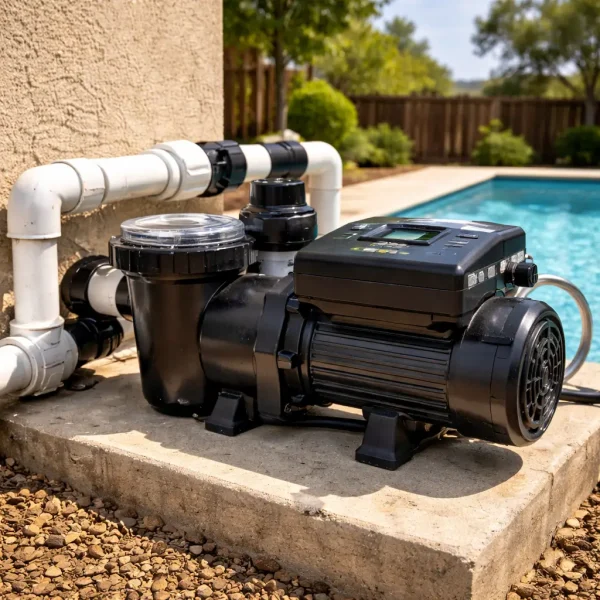
The U.S. Department of Energy has published updated efficiency standards for pool pumps that now require variable-speed technology for most replacement installations. This shift means upgrading often aligns with both federal guidelines and long-term savings.
We walk every Rocklin homeowner through this decision with honest numbers. No pressure to upgrade if a motor swap is the right call. No shortcuts if a full replacement makes more sense for your situation.
If you’ve never had a pool pump replaced, it helps to know what the process looks like from start to finish. There are no surprises when you know what to expect.
Homes in Granite Bay and west Rocklin sometimes have longer plumbing runs between the pool and the equipment pad. That extra distance affects how hard the pump has to work to move water. We size every pump to account for your specific plumbing length so you get full circulation without flow loss.
Where your pump sits and how it connects to your pool affects everything from noise levels to how long the equipment lasts. Most homeowners never think about placement until something goes wrong.
A pump installed too far from the pool has to pull water across a longer distance. That extra strain makes priming harder, reduces flow, and puts more stress on the motor and seals. A pump placed too close to a bedroom window or patio creates noise complaints, especially with older single-speed models running early in the morning.
Rocklin’s rocky decomposed-granite soil adds another layer to the equation. Not every spot on your property can support an equipment pad. The ground has to be level, stable, and accessible for future service. In some cases, pad locations are limited by what the soil allows before you even factor in local setback rules.
Neighborhoods like Whitney Ranch have HOA noise guidelines that affect where pumps can be placed relative to property lines and neighboring homes. Ignoring those guidelines can result in fines or forced equipment relocation after the install is already complete.
Piping layout matters just as much as pump position. Every 90-degree elbow in your plumbing adds resistance. Too many turns between the skimmer and the pump reduce suction. Too many turns on the return side reduce flow back to the pool. Clean, direct plumbing runs give your pump the best chance at a long, efficient life.
When we install or relocate a pump in Rocklin, we factor in soil conditions, setback requirements, HOA rules, plumbing distances, and noise. Getting placement right the first time prevents costly corrections later.
A new pump is only as good as the habits behind it. Running your pump on the right schedule keeps the water clean, the equipment cool, and your energy bills in check.
The goal is to turn over your entire pool volume at least once per day. For most residential pools in Rocklin, that means running the pump between 8 and 10 hours during peak summer months from June through September. Water temperatures regularly climb above 85 degrees during that stretch, and warm water breeds algae fast if circulation drops off.
In winter, 4 to 6 hours per day is usually enough. Water is cooler, bather loads are lower, and algae growth slows down significantly.
If you upgraded to a variable-speed pump, you have more flexibility. These pumps can run at lower speeds for longer periods, moving the same amount of water while using a fraction of the electricity. Many Rocklin homeowners run their variable-speed pumps 10 to 12 hours a day on a low setting and still see energy savings compared to running an old single-speed pump for 6 hours.
A few habits that make a real difference:
Small adjustments to your daily routine add years to your pump and keep your pool water clear between service visits.
Pool pumps in the Sacramento Valley face a specific set of challenges that homeowners in other parts of the country don’t deal with. Understanding what works against your equipment helps you stay ahead of preventable failures.
Debris from foothill landscaping. Rocklin sits at the edge of the Sierra foothills, surrounded by oak and pine trees. Leaves, pine needles, acorns, and pollen drop into pools year-round. When that debris gets past the skimmer basket and into the pump strainer, it clogs the impeller and restricts water flow. A starved pump runs hot. A hot pump burns out faster.
Mineral-heavy water. Placer County water carries high levels of calcium and other dissolved minerals. Over time, those minerals coat the inside of the pump housing, build up on the impeller blades, and eat away at shaft seals. When water chemistry drifts even slightly off balance, the corrosion accelerates. Seals that should last three to four years may fail in half that time.
Extreme summer heat. Air temperatures above 100 degrees heat up the equipment pad and everything sitting on it. Pumps running in direct afternoon sun work harder to stay cool. Motors that overheat repeatedly lose efficiency and eventually fail. Shade structures or strategic pad placement make a measurable difference.
Freezing overnight temps. Winter nights in Rocklin occasionally dip below freezing. Water trapped in the pump housing or plumbing can expand and crack the volute or fittings. A single hard freeze can destroy a pump that was running fine the day before.
Skipped maintenance. Dirty filters, clogged baskets, and unbalanced water chemistry all force the pump to compensate. That extra strain compounds over months and years. Most premature pump failures we see in Rocklin trace back to small maintenance tasks that were put off too long.
Staying on top of these local factors is the most reliable way to get the full 8 to 12 year lifespan out of your pool pump.
Knowing if your pool pump motor is bad or just needs a minor repair comes down to a few quick checks. If the motor hums but doesn’t spin, the capacitor may be failing. If the breaker trips every time the pump turns on, the motor windings could be burned out. Visible water leaking from the base of the pump usually means the shaft seal needs replacing, which is a straightforward fix. These symptoms can look similar to a homeowner, but a professional diagnostic in Rocklin pinpoints the exact cause so you only pay for what actually needs repair.
Pool pump installation in Rocklin requires a licensed technician for the electrical and plumbing connections. Placer County requires permits for this type of work, and improper wiring or plumbing can create serious safety hazards. A bad installation can also void manufacturer coverage on the new equipment. Beyond code requirements, a professional ensures the pump is properly sized, correctly plumbed, and programmed to match your pool’s filtration needs. The upfront cost of a licensed install protects you from expensive problems down the road.
Yes, your pool pump should be elevated off the ground on a raised pad. A raised pad keeps the motor housing above standing water during heavy rain and protects it from dirt and debris that collect at ground level. This matters even more in Rocklin during the fall months when heavy leaf drop from surrounding oak trees piles up around equipment pads. Moisture sitting against the motor housing promotes rust and electrical corrosion. A few inches of elevation is a simple step that helps your pump last longer and run cleaner between service visits.
Commercial Pool Maintenance
Pool Filter Repair
Swimming Pool Inspection
Pool Pump Replacement
Swimming Pool Heater Repair
Pool Motor Repair
Swimming Pool Electrical Repair
Pool Automation System Repair
Pool Light Repair
Pool Plumbing Repair
Swimming Pool Auto Water Fill Repair
Heat Pump Repair
Pool System Diagnostics
Swimming Pool Equipment Repair
Saltwater System Repair
Serving: Rocklin · Roseville · Lincoln · Granite Bay · Loomis · Penryn · Newcastle · Auburn · Citrus Heights · Folsom · Orangevale · Fair Oaks · Carmichael
Call us or fill out the form above to schedule your Rocklin pool pump repair today.