


In Rocklin, pool heat pumps work hard from early March through late November. That long season puts real wear on compressors, fan motors, and electrical components. This page covers heat pump diagnosis, repair, and seasonal upkeep for residential pools across the Rocklin area. Most repairs can be scheduled within the same week. Cool Pools, Inc. is a trusted local swimming pool repair service built for Placer County homeowners who want honest answers and reliable results.
Yes, most residential pool heat pumps can be repaired by a qualified technician. Common fixes include replacing capacitors, fan motors, compressors, and thermostats. Rocklin’s hot summers and mild winters mean heat pumps run long seasons, so parts wear faster than in cooler climates. A local technician familiar with Placer County installations can often diagnose the problem in a single visit.
When a pool heat pump stops heating, many homeowners assume the whole unit needs to go. That is rarely the case. Most heat pump failures come down to a single part. A worn capacitor, a failed fan motor, or a faulty thermostat can shut the system down completely. But replacing that one part often restores full function at a fraction of the cost of a new unit.
Rocklin pools run heat pumps eight or more months per year. That extended season puts steady wear on moving parts, especially compressors and fan motors. The good news is that these components are designed to be serviced and replaced individually. A heat pump that has lost heating power does not automatically need to be retired.
Homes in Whitney Oaks and Stanford Ranch often have heat pumps installed during original construction. Many of those units are 10 to 15 years old and still have solid cabinet frames, coils, and plumbing connections. When the core structure is sound, a targeted repair makes more sense than a full replacement.
Here is what we look at before recommending any repair or replacement:
If the compressor is healthy and the unit is under 10 years old, repair is almost always the smarter path. We walk you through the numbers so the decision is clear.
Most pool heat pump problems fall into two categories: restricted airflow or electrical failure. Understanding which type you are dealing with helps you describe the issue clearly when you call for service. That speeds up diagnosis and gets your pool warm again faster.
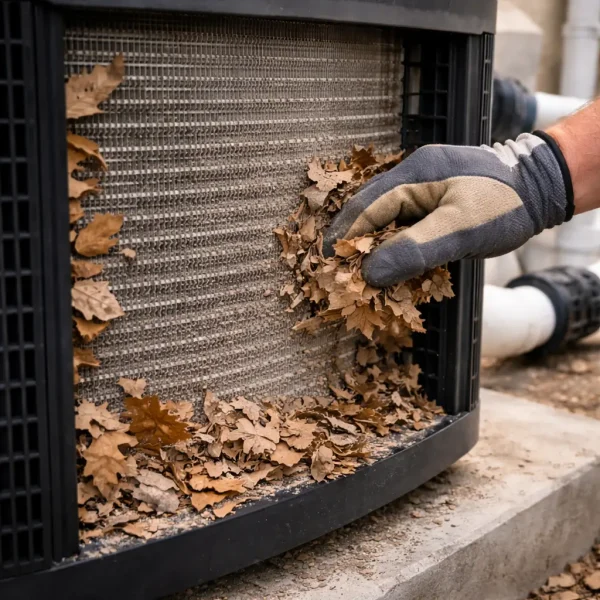
Airflow problems are the leading cause of poor heat pump performance in Rocklin. Oak leaf debris and dry summer dust collect on the evaporator coil over time. As the coil gets clogged, the unit cannot pull enough outside air across the refrigerant lines. The compressor works harder to compensate, which raises energy costs and shortens part life. A heat pump that runs constantly but barely warms the pool is almost always fighting an airflow restriction.
Electrical faults are the other major category. These tend to show up as a unit that will not start at all or shuts off shortly after turning on. The most common electrical failures include:
The U.S. Department of Energy’s heat pump maintenance guide recommends regular coil cleaning and electrical inspection to keep systems running at peak performance. In a climate like Rocklin’s, where units run most of the year, that maintenance matters even more.
When we arrive for a diagnosis, we check airflow first. If the coils are clear and airflow is strong, we move to the electrical system. This approach isolates the real problem quickly and avoids unnecessary part replacements.
You do not need to be a pool technician to notice when something is wrong with your heat pump. The signs are usually easy to spot, especially during Rocklin’s long summer season. When daytime temperatures reach 100 degrees or higher, your pool should hold heat well overnight. If you notice a sharp temperature drop by morning, your heat pump may be struggling.
Catching problems early keeps small issues from turning into compressor failures. A failing capacitor or a dirty coil is a straightforward fix. A burned-out compressor is not. The sooner you recognize the warning signs, the less the repair is likely to cost.
Here is what to watch for:
The unit runs but the pool stays cold. This usually points to low refrigerant, a clogged evaporator coil, or a failing compressor. The heat pump sounds like it is working, but the water temperature keeps dropping.
Unusual noise during operation. Grinding, rattling, or loud buzzing can signal a worn fan motor bearing, loose hardware, or a struggling compressor. A healthy heat pump runs with a steady, low hum.
Short cycling. The unit turns on for a few minutes, shuts off, then restarts. This pattern often comes from an overheating compressor, a faulty thermostat, or a refrigerant issue triggering the high-pressure switch.
Ice forming on the coils. Even in warm weather, low refrigerant or poor airflow can cause ice buildup on the evaporator coil. If you see frost on a 95-degree day, something is wrong.
Error codes on the display. Many modern heat pumps show diagnostic codes when a fault is detected. Write down the code before resetting the unit. That information helps your technician narrow the problem before arriving.
Homeowners in Sunset Whitney and Clover Valley with older units should check their heat pump at least once a month during peak season. A quick visual inspection of the coils, a listen for odd sounds, and a glance at the display panel takes less than five minutes and can save hundreds in avoidable repairs.
If your pool heat pump stops unexpectedly, a simple reset is worth trying before you call for service. Minor electrical faults can lock up the system, and a reset clears them without any tools or technical knowledge.
Summer power surges on the Rocklin grid are a common trigger. When demand spikes during triple-digit afternoons, brief voltage fluctuations can trip your heat pump’s internal safety controls. The unit shuts down to protect itself. A reset brings it back online in most cases.
Follow these five steps to reset your pool heat pump safely:
If the heat pump starts normally and holds steady operation, the surge likely caused a temporary fault. No service call needed.
Call a technician if any of these happen after the reset:
The unit will not power on at all. The same error code reappears. The heat pump starts but shuts off again within a few minutes. You hear clicking, buzzing, or humming without the fan or compressor engaging.
These signs point to a failed capacitor, a stuck contactor, or a control board issue. These are common repairs, but they require a trained technician to handle safely. Electrical components inside a heat pump carry high voltage even when the unit is off, so opening the access panel yourself is not recommended.
A reset takes less than two minutes and solves the problem more often than most homeowners expect. It is always the right place to start.
A pool heat pump that gets annual service lasts longer and breaks down less often. Most of the failures we see in Rocklin could have been prevented with a single maintenance visit earlier in the season.
The best time to schedule service is in early spring before swim season starts. A technician can catch worn parts, clean buildup from the coils, and verify the electrical system before you need the unit running daily. That one visit reduces your chances of an emergency repair in July when you need your heat pump the most.
Rocklin’s dry, oak-studded landscape creates extra challenges for heat pump owners. Fall brings heavy leaf drops that pile around equipment pads and pack into evaporator coils. Dry summer dust settles into the fins throughout the warmer months. Left alone, that buildup restricts airflow and forces the compressor to work harder than it should. Homes near Secret Ravine or along the local trail systems collect more debris than most and benefit from a second coil cleaning in the fall.
A standard seasonal maintenance visit covers the following tasks:
Coil cleaning. We clear all debris from the evaporator coil and straighten any bent fins that block airflow. Clean coils are the single biggest factor in heat pump efficiency.
Electrical connection inspection. We check wiring, contactors, and capacitors for signs of corrosion, heat damage, or loose connections. Catching a weak capacitor now prevents a no-start failure later.
Refrigerant check. We verify refrigerant levels are within the manufacturer’s range. Low refrigerant reduces heating output and can damage the compressor over time.
Drainage verification. We confirm that condensation is draining properly away from the unit. Standing water around the base leads to corrosion on electrical components and cabinet hardware.
Winterization steps. Before shutting the unit down for winter, we power it off at the breaker, clear surrounding debris, and cover the unit to protect it from rain and fallen leaves. Internal drainage and refrigerant checks during winterization should always be handled by a licensed technician.
One maintenance visit per year keeps most Rocklin heat pumps running strong for over a decade. Two visits per year is even better for homes surrounded by mature oaks.
A well-maintained pool heat pump in Rocklin typically lasts 10 to 15 years. A neglected one often fails by year seven or eight. The difference almost always comes down to how consistently the unit has been serviced and how hard it has been working each season.
Rocklin’s climate plays a direct role in heat pump lifespan. Pools here stay open longer than in most parts of the country. A heat pump running from March through November logs significantly more hours per year than one in a cooler coastal area. More run hours mean more wear on the compressor, fan motor, and electrical components. That does not mean the unit will fail early. It means maintenance matters more here than it does in milder climates.
Several factors determine how long your heat pump will last:
Maintenance history. Units that receive annual coil cleaning, electrical inspections, and refrigerant checks consistently outlast those that only get attention after something breaks.
Original installation quality. A heat pump that was properly sized for the pool, installed on a level pad with good drainage, and wired to the correct breaker will perform better from day one. Poor installation shortens lifespan no matter how well the unit is maintained afterward.
Run hours per season. Rocklin heat pumps may run 1,500 or more hours in a single season. Compare that to 800 or 900 hours in a milder climate. Higher run hours are normal here, but they accelerate part wear.
Refrigerant type. Older units using R-22 refrigerant are increasingly expensive to service because the refrigerant has been phased out. Newer units use R-410A or R-32, which are more available and more affordable to recharge.
The 20-degree rule. Heat pumps lose efficiency when the outside air temperature drops more than 20 degrees below your target water temperature. In Rocklin, this mainly applies in late November and early March mornings. Running a heat pump hard in those conditions strains the compressor and shortens its useful life. On cold mornings, reducing your target temperature or waiting until afternoon to run the unit helps protect the system.
When deciding between repair and replacement, we look at the full picture. If your unit is under 10 years old, the compressor is healthy, and repairs have been infrequent, investing in the fix is usually the right call. If the unit is past 12 years, uses outdated refrigerant, and has needed multiple repairs in the past two seasons, replacement starts to make more financial sense.
We lay out the costs side by side so you can make a confident decision based on real numbers, not pressure.
Most pool heat pump repairs in Rocklin are completed in a single visit. Common fixes like capacitor replacements, contactor swaps, and fan motor installations typically take one to two hours on-site. Compressor or refrigerant work may require a follow-up visit depending on parts availability. The Sacramento region has strong supply access for most major heat pump brands, so delays are uncommon.
Pool heat pump repair costs in Rocklin depend on the failed part and the labor involved. Minor electrical fixes like a capacitor or contactor replacement are on the lower end. Fan motor and control board repairs fall in the mid-range. Compressor replacement is the most expensive single repair but still costs significantly less than buying a new unit. We provide a clear estimate before starting any work so there are no surprises.
All pool heat pumps use the same basic technology to pull warmth from the air and transfer it to your pool water. However, not all brands handle Rocklin’s extended warm season equally well. Units with larger evaporator coils and corrosion-resistant cabinets tend to hold up better over eight or more months of annual use. When we service your unit, we can let you know how your specific brand and model is performing relative to our experience across Rocklin.
A pool heat pump and a gas pool heater are not the same. A heat pump uses electricity and outside air to warm your pool water. A gas heater burns natural gas or propane to generate heat directly. Heat pumps cost less to operate over time and work well in Rocklin’s warm climate. Gas heaters heat water faster but have higher monthly fuel costs. Both systems are common in Rocklin, and we service and repair each type.
Commercial Pool Maintenance
Pool Filter Repair
Swimming Pool Inspection
Pool Pump Replacement
Swimming Pool Heater Repair
Pump Repairs & Installation
Pool Motor Repair
Swimming Pool Electrical Repair
Pool Automation System Repair
Pool Light Repair
Saltwater System Repair
Pool Plumbing Repair
Pool System Diagnostics
Swimming Pool Equipment Repair
Swimming Pool Auto Water Fill Repair
Serving: Rocklin · Roseville · Lincoln · Granite Bay · Loomis · Penryn · Newcastle · Auburn · Citrus Heights · Folsom · Orangevale · Fair Oaks · Carmichael
Schedule your Rocklin heat pump repair before a small fault turns into a compressor failure.