


In Rocklin, summer heat can turn a neglected pool dark green in just a few days. Algae spreads fast when filtration slows down and chemical levels drop. If your pool water has turned green, you are not alone. Professional green pool cleanup in Rocklin is one of the most common service calls we handle from spring through fall. Cool Pools offers same-week service for Rocklin homeowners ready to get their pool back to safe, swimmable condition. As a trusted swimming pool repair service with over 23 years of experience, we restore water clarity and balanced chemistry so you can stop worrying and start swimming again.
Green pool cleanup is a multi-step process that removes algae, restores filtration, and rebalances water chemistry. In Rocklin, the process typically takes 2 to 5 days depending on severity and water temperature.
You bought a bag of pool shock. You dumped it in. You waited. And the water is still green.
This happens more often than you might expect. A single shock treatment can work on mild algae, but moderate to severe blooms need more than one round of chemicals to clear. When the algae has had time to take hold on your pool walls and floor, shocking alone rarely finishes the job.
One reason shock treatments fail in Rocklin is the local water chemistry. The granite-heavy soil and alkaline tap water in this area push pH levels up quickly. When pH rises above 7.6, chlorine loses its killing power. So even if you added the right amount of shock, the high pH may have weakened it before it could do its job.
A failed shock treatment usually points to one or more of these issues:
If you shocked your pool and it is still green, the problem is not the product. The problem is that algae cleanup requires a full process, not just one step. That is where professional service makes the difference. We diagnose what went wrong, correct the root cause, and treat the pool in the right order so the water actually clears.
Pool owners in Whitney Oaks and Stanford Ranch often notice the same pattern. The pool looked fine on Monday. By Friday, the water is cloudy green. By the following week, it is dark and murky.
That speed catches people off guard, but it makes sense when you look at local conditions.
Rocklin summers regularly push past 100 degrees. Water temperatures climb into the high 80s and low 90s. Algae thrives in warm water. The hotter your pool gets, the faster algae reproduces. What might take two weeks in a cooler climate can happen in two or three days here.
Hard water makes the problem worse. Rocklin’s tap water carries high calcium levels, especially in homes connected to well water systems. Calcium-rich water drives pH upward and reduces chlorine effectiveness. Your pool may test fine in the morning, but by afternoon the chemistry has already shifted enough to give algae an opening.
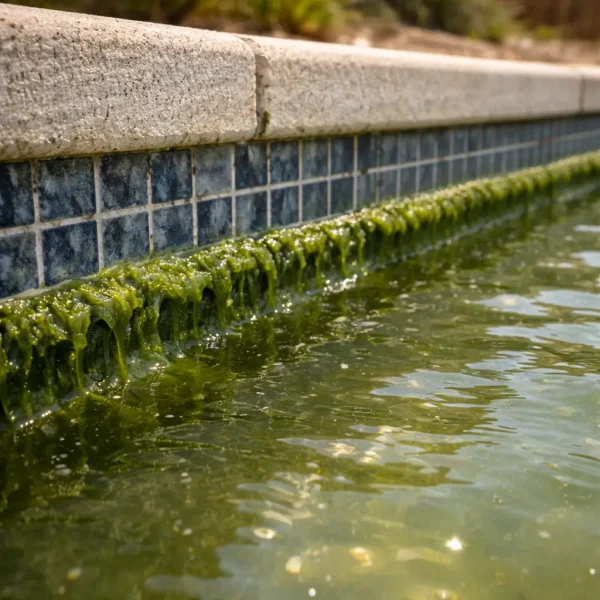
These two factors working together create a cycle that is hard to break without professional help. High heat accelerates algae growth. Hard water weakens the chemicals meant to stop it. Generic pool care advice found online does not account for these local conditions, which is why many Rocklin homeowners try multiple treatments before calling for service.
The CDC recommends maintaining free chlorine between 1 and 3 parts per million for safe swimming conditions. In Rocklin’s summer heat, staying within that range requires more frequent testing and faster chemical adjustments than most pool owners realize.
Understanding why algae grows so aggressively here helps explain why professional cleanup is often the fastest path back to clear water.
When your pool water turns dark green or black-green, you are dealing with a severe algae bloom. At that stage, store-bought chemicals and weekend effort are unlikely to get the job done. Most homeowners who try to handle it themselves spend two to three weeks cycling through shock treatments, filter cleanings, and water tests with little progress.
Professional crews handle severe cases in 2 to 5 days.
The difference comes down to equipment, chemical knowledge, and process. A professional service arrives with commercial-grade brushes, powerful vacuums, and the ability to dose chemicals precisely based on pool volume and algae severity. There is no guessing. Every step is matched to the condition of the water.
Older pools in Rocklin present an added challenge. Many homes near Sunset Whitney were built decades ago with plaster finishes that have developed hairline cracks and rough surfaces over time. Algae embeds itself in those imperfections and resists standard brushing. Professional crews know how to work aged plaster surfaces without causing further damage while still removing the algae that hides in every small gap.
DIY methods also miss a step that matters more than most people realize. Dead algae has to be physically removed from the pool. Killing it is only half the job. If the dead algae stays in the water, it clouds the pool, clogs the filter, and feeds the next bloom. Professional cleanup includes full vacuuming and filter purging to make sure nothing is left behind.
If your pool has gone past light green into dark or black-green territory, professional service is the faster and more reliable path back to clean water.
The most common mistake with a green pool is reaching for chemicals first. If your filter is dirty and your skimmer baskets are full, adding shock to the water will not fix anything. The chemicals have nowhere to circulate, and the algae keeps growing.
The correct sequence matters.
1. Clean the filter. Whether you have a cartridge, sand, or DE filter, it needs to be fully cleaned or backwashed before any chemical treatment begins. A clogged filter cannot move water fast enough to distribute chemicals evenly across the pool.
2. Remove debris. Leaves, twigs, seeds, and organic material sitting on the bottom or floating on the surface feed algae. All of it has to come out before treatment starts.
3. Brush the walls and floor. Algae clings to pool surfaces. Brushing breaks its grip and exposes it to the chemicals that follow.
4. Then add chemicals. With clean filtration and a debris-free pool, shock treatments and algaecides can actually reach the algae and do their job.
This sequence is especially important in neighborhoods like Clover Valley where mature oak trees drop heavy loads of leaves, acorns, and pollen into pools year-round. That organic debris clogs filters fast and creates a food source for algae. Skipping the pre-cleanup steps in these areas almost guarantees the chemical treatment will underperform.
We see it often. A homeowner adds bag after bag of shock with no improvement. The water stays green. The filter pressure climbs. Frustration builds. Once we arrive and start with filtration and debris removal, the same chemicals that failed before begin working within hours.
If your pool is not responding to shock, check your filter first. That is usually where the real problem starts.
Your pool water finally looks blue again. The temptation to jump in is strong, especially on a hot Rocklin afternoon. But clear water does not automatically mean safe water.
After a green pool cleanup, the chemistry needs time to stabilize. Chlorine levels may test fine at 8 a.m. but drop sharply by mid-afternoon as the sun and heat burn through the residual chemicals. One good reading is not enough. The water needs to hold safe levels consistently before anyone swims.
We recommend waiting 48 to 72 hours after the final treatment before swimming. During that window, we test the water multiple times across different parts of the day to confirm that both chlorine and pH remain within safe ranges.
Here is what we are watching for during post-cleanup testing:
Rocklin’s high afternoon temperatures create a unique challenge during this phase. A pool that tests perfectly at sunrise can lose half its chlorine by 3 p.m. when surface temperatures peak. That rapid chemical loss is why a single morning test does not tell the full story.
Families with young children or elderly swimmers should be especially cautious. Bacteria from the original algae bloom can linger even after the water clears visually. Only verified, stable chemistry confirms the pool is truly safe.
We know you are eager to get back in the water. So are we. But the final testing window is what separates a pool that looks clean from a pool that actually is clean. Rushing this step puts your family at risk and increases the chance of the algae returning within days.
The best green pool cleanup is the one you never need. With the right weekly routine, most algae problems in Rocklin are completely preventable.
Algae needs three things to grow: warm water, organic material, and a gap in chemical coverage. Weekly professional maintenance controls all three. Your filter stays clean. Debris gets removed before it breaks down. Chemical levels stay balanced even as temperatures climb.
Spring is where prevention starts. Pollen season in the Whitney Ranch and Park Drive areas drops heavy loads of organic material into pools from March through May. That pollen settles on the surface, sinks to the floor, and feeds algae the moment chlorine dips below effective levels. Even a brief lapse in chemical coverage during pollen season can trigger a bloom that takes days to clear.
From April through October, weekly service is the standard we recommend for Rocklin pool owners. During peak summer months, that weekly visit covers:
Pool owners who maintain consistent weekly service through the warm months rarely deal with green water. The ones who skip a week or two during the hottest stretch of summer are the ones calling for emergency cleanup in August.
Prevention costs a fraction of what a full green pool cleanup requires. It also means your pool stays ready to swim every day instead of sitting unusable for a week while the water recovers.
If you have dealt with a green pool once this year, weekly maintenance is the simplest way to make sure it does not happen again. Contact Cool Pools to set up a service schedule that keeps your water clear and your weekends stress-free.
You rarely need to drain a green pool before cleanup in Rocklin. Most green pools are treated in place using a combination of filtration, brushing, chemical treatment, and vacuuming. Draining is only recommended in extreme cases involving severe black algae or when the plaster surface needs structural repair that cannot be done with water in the pool.
Yes, you should run your pool pump while waiting for green pool service in Rocklin. Keep it running 24 hours a day until your service appointment. Continuous circulation helps distribute whatever chlorine remains in the water and slows algae growth. It also prevents debris from settling on the bottom, which makes the cleanup process faster once the crew arrives.
Yes, a green pool can damage your equipment if left untreated. Algae-filled water clogs filter cartridges and strains your pump motor as it works harder to push water through blocked lines. Prolonged exposure to unbalanced chemistry can also corrode metal fittings and shorten the life of seals and gaskets. The longer a green pool sits, the more stress it puts on every part of your circulation system.
Serving: Rocklin · Roseville · Lincoln · Granite Bay · Loomis · Penryn · Newcastle · Auburn · Citrus Heights · Folsom · Orangevale · Fair Oaks · Carmichael
Schedule your Rocklin green pool cleanup so you can swim again.