


Pool surfaces in Rocklin face constant pressure from mineral buildup and algae growth. Warm Sacramento Valley temperatures push algae season well beyond summer, and hard water from local sources leaves calcium deposits on plaster, pebble, and tile finishes. Professional pool brushing in Rocklin, CA removes what chemicals alone cannot. Cool Pools provides weekly, biweekly, and one-time brushing as part of our full pool maintenance service. As a trusted swimming pool repair service with over 23 years of experience, we keep Rocklin pools clean, smooth, and algae-free year-round.
Pool brushing removes algae spores, calcium scale, and fine debris that cling to walls, floors, and tile lines. In Rocklin, hard water from local sources speeds up mineral deposits on plaster and pebble finishes. Professional brushing breaks up this buildup before it bonds to the surface.
Algae does not show up overnight. It starts as a thin, invisible layer on pool walls and floors. By the time you see green or feel something slippery underfoot, the growth has already taken hold.
Weekly brushing breaks that cycle early. A proper brush stroke strips algae spores off the surface before they anchor into plaster or pebble. Once those spores are loose, your filter and sanitizer can do their jobs. Without brushing, chemicals have to work harder and burn off faster.
Rocklin’s summer heat makes this worse. When air temps climb above 100°F from May through October, water temperatures rise with them. Warm water is where algae thrives. Pools that go even two weeks without brushing during peak season often develop visible staining or discoloration along the waterline and in shaded corners.
Brushing also prevents mineral stains from setting in. Calcium and iron in Rocklin’s water supply leave behind faint deposits each week. Left alone, those deposits darken and harden. A weekly brush pass keeps surfaces smooth and extends the life of your pool finish.
The fix is simple. Consistent brushing paired with balanced chemistry keeps your pool walls clean, your water clear, and your chemical costs lower all season long.
Many pool owners in Whitney Ranch and Stanford Ranch trust chemicals to handle everything. Chlorine kills bacteria and controls algae in the water. But it cannot scrub buildup off a pool wall.
When brushing stops, here is what happens over time:
The National Plasterers Council notes that all pool finishes have microscopic depressions where dirt and debris collect over time, eventually showing as visible discoloration without regular brushing. Chemicals treat the water. Brushing protects the surface.
Rocklin’s hard water accelerates every stage of this process. Pool owners in softer-water regions have more margin for missed brushings. Here, skipping even a month can leave damage that only resurfacing will fix.
The cost of a weekly brush pass is small. The cost of replastering a pool is not.
Vacuuming picks up debris from the pool floor. Brushing handles what vacuuming cannot reach. They are two different jobs, and one does not replace the other.
A vacuum moves along flat surfaces and collects leaves, dirt, and sediment that has already settled. But it rolls right past the walls, steps, corners, and areas behind ladders where algae and calcium like to hide. Those are the spots brushing targets.
Think of it this way. Brushing loosens buildup from every surface in the pool. Vacuuming then collects what brushing knocked free. Skip the brushing step, and your vacuum is only picking up what gravity dropped to the floor. The walls, tile line, and crevices stay dirty.
This matters even more in Rocklin. Oak and pine debris from the surrounding foothills breaks down into fine particles that settle in hard-to-reach areas. Leaves that sink behind a ladder or along a bench seat decompose and feed algae growth in those shaded pockets. Brushing those spots first gets the debris moving so your vacuum or filter can finish the job.
For a fully clean pool, the order matters:
When both services work together on a regular schedule, your pool stays cleaner with less chemical demand and fewer surprise algae blooms.
The short answer is once a week during swim season. For most Rocklin homeowners in Sunset West and Spring Creek, that means April through early November.
Rocklin’s climate keeps pools in use longer than most parts of the country. Summers are hot and dry. Winters are mild. Many families swim well into October, and pool equipment runs year-round. That extended season means surfaces need attention for more months than pool owners expect.
Here is a simple schedule to follow:
| Season | Months | Brushing Frequency |
|---|---|---|
| Peak swim season | May through September | Once per week |
| Shoulder months | April and October through November | Once per week to biweekly |
| Winter | December through March | Once or twice per month |
A few factors bump up the frequency. Pools shaded by oak trees collect more organic debris and need extra brushing to stay ahead of algae. Pools with older plaster finishes have rougher surfaces where buildup grabs hold faster. And during heat waves above 105°F, algae growth can double in speed.
Staying on a consistent brushing schedule does more than keep walls clean. It reduces your chlorine demand, protects your finish from staining, and makes every other part of pool maintenance easier. A pool that gets brushed weekly almost never turns into a green pool cleanup project.
Not all pool finishes are the same, and using the wrong brush causes real problems. A stainless steel brush on a pebble finish scratches the surface. A soft nylon brush on bare plaster leaves buildup behind. Matching the brush to the finish matters.
Plaster pools are the most common in older Rocklin neighborhoods. Standard white plaster has a slightly rough texture that traps algae and calcium easily. These pools do well with a stainless steel bristle brush that scrubs hard enough to break through mineral deposits without damaging the surface.
Pebble-finish pools are popular in newer Rocklin subdivisions near Quarry Park. The textured aggregate surface looks great but requires a gentler touch. Nylon-bristle brushes clean pebble finishes without pulling loose stones or scratching the exposed aggregate. Stiff steel bristles can chip the finish and create rough spots where algae takes hold even faster.
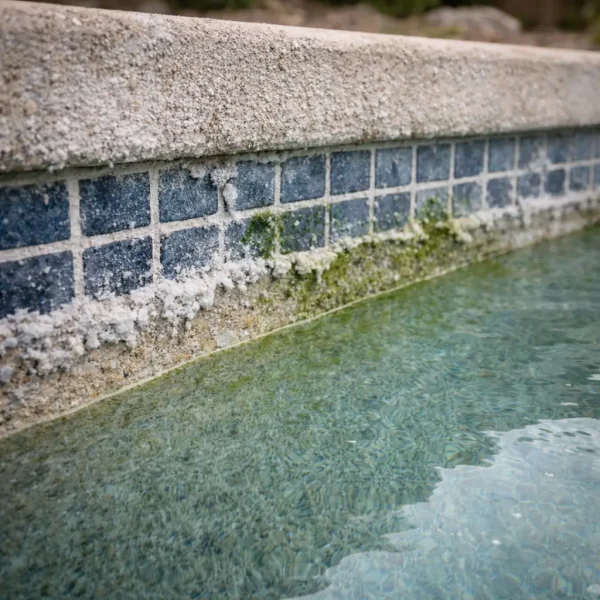
Tile lines along the waterline need their own attention. Calcium scale builds up quickly on tile in Rocklin’s hard water. A smaller handheld brush with medium stiffness works best for tile. Scrubbing the tile line weekly prevents the thick white crust that becomes nearly impossible to remove without professional tools.
Fiberglass pools have the smoothest surface of all. These require only a soft nylon brush. Anything more aggressive leaves micro-scratches that dull the gel coat over time.
Our crews carry the right brushes for every surface type. We match the tool to your pool’s finish on every visit so the job gets done without putting your investment at risk.
Most Rocklin pool owners cut back on maintenance from December through February. Swim season is over. The pool sits quiet. It feels like nothing needs attention.
But pool surfaces do not take the winter off.
Rocklin’s Tule fog season brings weeks of cool, damp air that settles over the Sacramento Valley. That moisture feeds surface algae even when the pool is not in use. At the same time, calcium in the water keeps depositing on walls and tile lines. Without brushing, a thin layer of scale and dormant algae builds up slowly through the winter months.
By March, here is what pool owners often find:
All of that adds up to a longer, more expensive spring startup. Chemical costs go up. Extra cleaning visits get added. In some cases, the damage from a full winter of neglect shortens the life of the pool finish.
The simple fix is one or two brush passes per month through winter. A quick brushing in December, January, and February keeps calcium from crusting over and stops algae from settling in. When April comes, your pool is ready to open with minimal effort and lower startup costs.
We include winter brushing as part of our year-round maintenance plans. One less thing to worry about when the weather warms back up.
Pool brushing can remove fresh calcium deposits when combined with proper chemical treatment. Light scale that has formed within the past few weeks usually responds well to a stiff brush and a pH adjustment. Older calcium buildup that has bonded to plaster or tile over months may require stronger professional methods to fully remove.
Brushing your Rocklin pool before adding chemicals gives you the best results. Brushing first loosens algae spores, calcium flakes, and fine debris from walls and floors. Once that material is suspended in the water, freshly added chlorine or other sanitizers reach it faster and work more effectively.
Yes, regular pool brushing helps lower your pool’s chlorine demand. When algae spores and organic film sit on walls and floors, your sanitizer works overtime trying to treat both the water and the surfaces. Brushing removes that layer so chlorine stays focused on the water. Pool owners who brush weekly often notice more stable chlorine readings and spend less on chemicals each month.
Serving: Rocklin · Roseville · Lincoln · Granite Bay · Loomis · Penryn · Newcastle · Auburn · Citrus Heights · Folsom · Orangevale · Fair Oaks · Carmichael
Schedule your Rocklin pool brushing before algae takes over your surfaces.