


Rocklin’s long, hot summers push pool algae growth into overdrive. Green water, yellow patches on walls, and stubborn black algae can take over a pool in just days. Cool Pools provides professional algae removal in Rocklin, CA for homeowners dealing with any type of algae bloom. We offer same-week service to get your pool back to safe, swim-ready condition. As a trusted swimming pool repair service with over 23 years of experience, we treat the problem at the source so your water stays clear all season.
The fastest way to remove pool algae is a professional multi-step process that includes shock treatment, full-surface brushing, continuous filtration, and vacuuming to waste. In Rocklin, extreme summer heat speeds algae regrowth when any step is skipped or rushed.
Dumping a bag of shock into a green pool feels like the right move. But if the water is still green a few days later, the problem runs deeper than chlorine levels alone.
Store-bought pool shock treats the surface of the issue. It raises chlorine temporarily, but it does not match the chemical type to the specific algae strain in your water. Green algae, yellow algae, and black algae each respond to different treatment methods. A single dose of granular shock rarely finishes the job on its own.
That is why so many Rocklin homeowners end up treating their pool two or three times before calling for help.
Pools in Whitney Ranch and Stanford Ranch sit in direct sun for most of the day. When surface water temperatures climb above 85°F, chlorine burns off faster than it can work. That heat also feeds algae growth, giving a weak treatment almost no chance of catching up.
Professional algae removal starts with identifying what type of algae is growing. From there, we select the right chemical concentration, brush every surface to break the algae’s grip, and run filtration long enough to clear the water completely. The goal is not just blue water today. The goal is water that stays blue.
If you shocked your pool and the green came back within a week, the treatment was not strong enough or targeted enough to match the bloom. A professional-grade approach solves it the first time.
A pool can go from clear to green in less than 48 hours. That is not an exaggeration. When conditions line up, algae multiplies fast enough to cloud an entire pool overnight.
Here is what triggers rapid algae growth:
In Rocklin, all four of these conditions show up together during peak summer. Dry stretches with temperatures above 100°F are normal from June through September. Newer subdivisions like Clover Valley have minimal mature tree cover, which means pools bake in full sun all day with very little shade to slow surface heating.
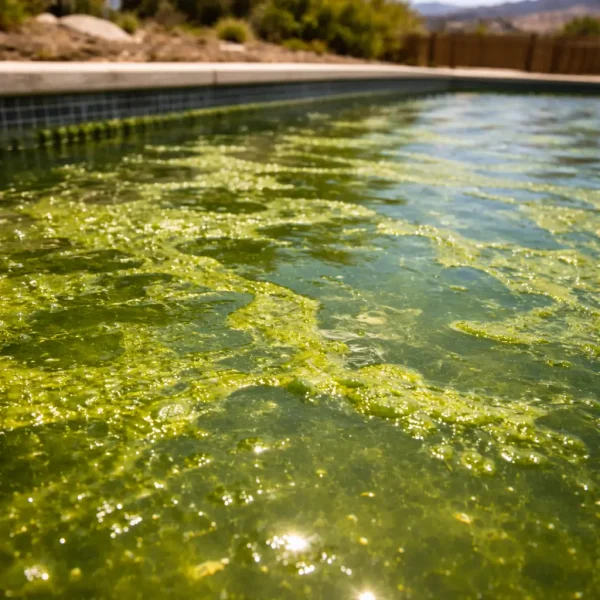
Missing just two or three days of maintenance during a heat wave gives algae everything it needs. A small green patch along the waterline Monday morning becomes a full pool takeover by Wednesday afternoon.
The speed of the bloom matters because it changes how you treat it. A light haze of green algae caught early may respond to a strong shock and brush. But once algae has spread across the floor and walls, the treatment plan needs to be more aggressive. Waiting another day only makes the job harder and the recovery longer.
According to the Centers for Disease Control and Prevention, properly maintained pool chemistry is one of the most effective ways to prevent waterborne illness in recreational water. Keeping chlorine at the right level is not just about appearance. It is about safety.
If your pool turned green after a missed week of service, acting quickly makes the difference between a simple treatment and a multi-day recovery.
A green pool does not mean your weekend is ruined. With the right process, most pools return to clear, swimmable water within 24 to 48 hours.
Professional algae removal follows a specific order. Skipping a step or doing them out of sequence slows the result.
Step 1: Test the water. We check chlorine, pH, alkalinity, and phosphate levels before adding anything. This tells us exactly what the water needs and how much.
Step 2: Treat with the correct chemical dose. Based on the algae type and severity, we apply a targeted shock treatment at professional-grade concentration. This is not a guess. The dose is calculated for your pool’s volume and current chemistry.
Step 3: Brush every surface. Algae clings to walls, steps, and the pool floor. Brushing breaks that grip so the chemicals can reach and kill the algae underneath.
Step 4: Run filtration nonstop. The filter needs to run for a full 24 hours after treatment. This pulls dead algae out of the water and keeps chemicals circulating evenly.
Step 5: Clear and rebalance. Once the water turns blue, we vacuum remaining debris and rebalance the chemistry so the pool is safe to swim in.
Families in Rocklin with a party or event coming up call us when they need fast results. We get it. A green pool the day before a birthday party is stressful.
One factor that affects treatment in Rocklin is the local water supply. Hard water with elevated mineral content changes how chemicals react. Our technicians adjust doses based on what Rocklin’s municipal water brings into your pool, so the treatment works the first time instead of falling short.
The chemicals did their job. The algae is dead. But your pool still does not look right.
That cloudy, gritty layer sitting on the floor is dead algae. It will not go away on its own. And if you leave it there, it creates a new set of problems.
Dead algae particles are fine enough to pass through some filter systems. When they clog the filter media, water flow drops. Circulation slows down. And the conditions that caused the original bloom start building again. What looked like a solved problem circles right back to green water within a week.
The fix is vacuuming to waste. This means bypassing the filter entirely and sending the dead algae straight out of the pool through the waste line. It is the only reliable way to remove heavy algae sediment without overloading your equipment.
After vacuuming, we clean the filter, check the pressure readings, and rebalance the water chemistry. This step closes the loop on the full algae removal process.
Rocklin homeowners in Sunset West and Spring Creek neighborhoods often deal with an extra challenge during this stage. Fine granite dust and sediment from the surrounding landscape settles into pools and mixes with the dead algae layer. That combination is too heavy and too fine for filtration alone to handle. Vacuuming to waste is the only method that removes it completely.
If you treated your pool yourself and now have a hazy, gritty mess on the bottom, that is normal. It just means the job is not finished yet. The treatment killed the algae. Now the debris needs to come out before your pool is truly clean and safe to swim in again.
Your pool water looks clear. But the walls feel slippery. Or there is a faint green tint along the steps that was not there last week.
This is one of the most misleading situations pool owners face. Clear water feels like safe water. But algae does not always announce itself with a full green takeover. Some types grow slowly and hide in places you do not check every day.
Mustard algae is the biggest example. It shows up as a yellowish, powdery film on shaded walls, steps, and behind ladders. It brushes off easily but comes back within days if it is not treated with the right chemical. Standard chlorine shock alone will not eliminate it. Mustard algae requires a specific algaecide combined with elevated chlorine levels to kill it completely.
Green algae in its early stages can also be invisible in the open water. You might notice the pool floor feels gritty or the water has a slight cloudiness that comes and goes. By the time the color is obvious, the bloom is already well established.
In older Sunset Whitney homes, mature oak and elm canopy creates heavy shade over parts of the pool. That shade keeps water cooler in those spots, which is where mustard algae thrives. Homeowners in these neighborhoods often deal with recurring yellow patches in the same areas season after season.
Professional water testing catches what your eyes cannot. We test for chlorine demand, phosphate levels, and early indicators of algae activity. Catching it at this stage means a simple targeted treatment instead of a full algae removal job.
If your water looks fine but something feels off, trust that instinct. A quick test can confirm whether algae is growing before it becomes visible.
Dealing with algae once is frustrating. Dealing with it every summer is a pattern that does not have to continue.
Most algae problems in Rocklin pools start long before the water turns green. They start with small gaps in off-season care that go unnoticed until temperatures spike in May or June.
A prevention plan built around Rocklin’s climate keeps algae from gaining a foothold. Here is what that looks like:
Pools that are winterized without algae treatment in fall are the most vulnerable. Dormant algae spores survive through winter. The first warm week of spring activates them. By the time the pool is opened for the season, the bloom is already underway.
Neighborhoods near Secret Ravine see this pattern more than most. Oak pollen and leaf debris blow into pools through fall and winter. That organic material feeds algae growth the moment water temperatures climb. Removing it before closing the pool for winter and treating the water with an algaecide makes a measurable difference in how the pool looks at spring opening.
Prevention costs less than treatment. It takes less time. And it means your pool is ready to swim in when you want it, not weeks after the season starts.
If you went through a green pool this year and do not want to repeat it next summer, a seasonal prevention plan is the simplest way to break the cycle. We build the schedule around your pool and your neighborhood so nothing gets missed.
Draining your Rocklin pool to remove algae is rarely needed. Chemical treatment combined with vacuuming to waste handles most algae blooms without emptying the pool. Draining also carries risk in Rocklin because the area’s expansive clay soil can shift and put pressure on an empty pool shell. Professional treatment is safer for both the water and the structure.
Professional algae removal typically costs more upfront than a single bag of store-bought shock, but it saves money in the long run. DIY attempts often require multiple rounds of chemicals, extra filter cleanings, and repeated water testing. When those costs add up alongside the time spent, professional treatment that solves the problem in one visit is usually the better value.
Yes, algae left untreated can cause damage to pool equipment over time. Heavy algae loads clog filter cartridges and grids, forcing the pump to work harder and shortening its lifespan. Algae buildup inside plumbing lines restricts water flow and reduces circulation efficiency. Removing algae promptly protects both your water quality and the equipment that keeps your pool running.
Serving: Rocklin · Roseville · Lincoln · Granite Bay · Loomis · Penryn · Newcastle · Auburn · Citrus Heights · Folsom · Orangevale · Fair Oaks · Carmichael
Schedule your Rocklin algae removal before a small bloom becomes a full pool takeover.